
I personally use psilocybin for pain management. It isn’t a very common practice (yet), but I expect it to become much more common as psilocybin becomes more common and accepted. The most common application for psilocybin is for mental health, so there are very few resources available on how to implement a psilocybin dosing schedule for managing pain. This is a list of useful points I wish I had before starting.
#1. Microdosing May Not Be a Great Idea
Microdosing may not be the best choice for severe pain conditions. Microdosing may reduce pain and inflammation over time, but it can also temporarily exacerbate pain for many people. When I am in pain, even a minidose will feel like it is increasing my pain sensitivity.
Starting out with series of larger “loading” doses is a great way to get results quicker and with less initial pain. “Trip” level doses are generally pain free for me, even if I am in pain at the start of the session. Smaller doses were unbearable if I was coming from a point of high pain. Pain clinics employ similar tactics when using other psychedelic-like medications like ketamine for chronic pain management.
#2 The Goal Is To Be Pain Free, Without Being Under The Influence
When using psilocybin for pain, you cannot treat it like a “pain killer”. It is not something you take daily to subdue pain. A psilocybin session is more like a very intense meditation session, except it works SIGNIFICANTLY better than meditation alone. You are putting yourself into a very flexible, fluid mental state in which you can begin to reinterpret pain signals. Think of it as like a physical therapy session, with lasting results long after the session has ended. Some people get more pain free time from each dose than others, so mileage may vary.
#3 Tripping Is Challenging
I had to really work hard to learn how to control and direct my psilocybin sessions. The ability to benefit from the psilocybin is directly linked to your ability to tolerate the sessions. If the experience is unpleasant, you are unlikely to stick with a dosing program long enough to see results. Therefore, I recommend taking an extremely cautious approach to dosing. Traumatizing yourself right out the gate is not a good idea. Find a good, experienced sitter. A pain patient has more to lose than the average person seeking a recreational experience. A recreational user can have an unpleasant experience and decide to avoid the substance in the future with no downside while a traumatized pain patient would miss out on the chance to benefit from it later on.
#4 Control Your Access
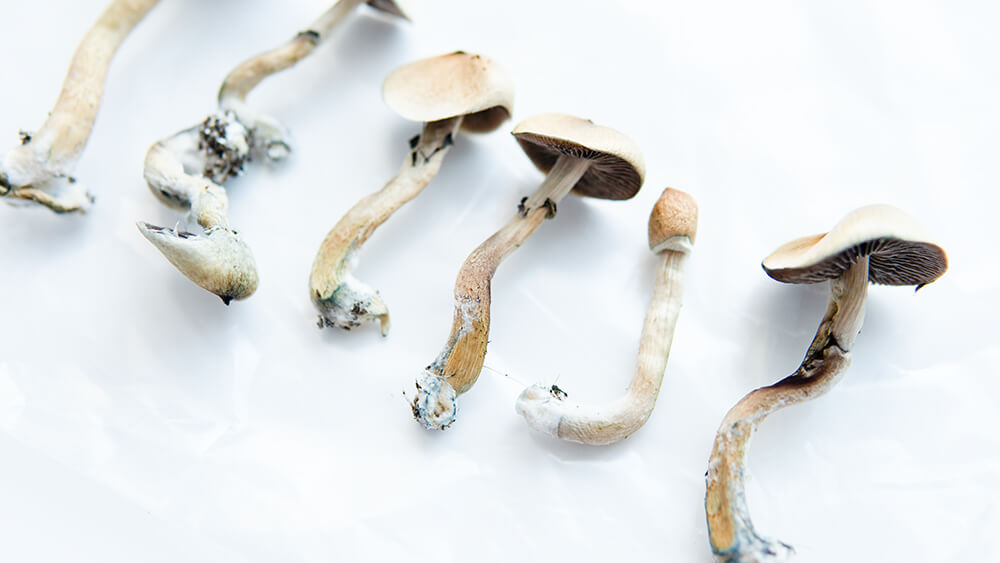
I grow my own psilocybin mushrooms. Early on in my journey, I would purchase them from an outside source. Not long after achieving pain free status, I had an interruption in my supply that was a serious setback and set me back to square one. My pain came back, and I had to start a grueling loading dose schedule again to get back to where I was. It is better to be in complete control of your access.
#5 Support Matters
Being in touch with other people who use psilocybin for pain management has been extremely important. Using a substance that has such a profound effect on your psyche can be a bit isolating, so having support groups or counseling is important.





10 Responses
Hi I love this I’ve been using psilocybin for a little over a year now for therapy with remarkable results. How long do you typically take between session ? 1 month, 2months or longer? Thanks for your time.
The schedule varies. Some people get a week of pain free time, others get a month or two.
Thanks for putting this information out there! I am just starting to figure out what works for me and this gave me some ideas.
I have CRPS and am exploring psylocibin treatment. Would a “heroic” dose be an appropriate loading dose, or would that be too much?
Yes, with the right support, a macro-dose of psilocybin may be helpful for your CRPS treatment. However, it’s not uncommon for people living with chronic pain conditions to require repeated periodic use to achieve sustained remission. See our blog post on the Burst and Pulse dosing regiment.
https://www.eleusiniaretreat.com/articles/guide-to-psilocybin-burst-pulse-dosing/
I have it too, your not alone , a back surgery rods and screws , while I was recovering I was hit from behind while I was twisted looking in the console, the lady pushed me into the intersection , I never heard tires squeal I was exactly 40 which is the most common time for crps to set in and it came in hard, good luck trying to find something for pain
Studys show that if you pair it with functional exercise the benefits are are amplified. So, try to throw some light exercise or physiotherapy into your life if you don’t do that already.
Studies*… Way to make myself look credible. Feel free to edit that last post and delete this one 🙂
Here’s a link to one mentioning this: https://pubmed.ncbi.nlm.nih.gov/36066961/
Right now I am 2hrs in and have used 4gms sclerota (philosofers stones, quite mild) and 8gms raw cacao powder. lower back, and cancer pain are there but it does not matter, in a little while I will be going to bed and focusing my mind on keeping the neurological and mental effects of this session on into the next few days, it seems to be an ok strategy for me.
I was born with several spinal defects, and autism. By the time I was 25 had been diagnosed with Multiple Sclerosis and fibromyalgia. I’d been using psilocybin since I was a teenager but not for pain. Then in about 2011 I was being treated with mild pharmaceutical pain medication and was being drug tested a few times a year. After losing my Dad in April and my Mom being in chemo most of this same year I decided that I needed to ditch the SSRIs that have never helped and try micro dosing or even macro dosing. The results to my mental health were practically instant and very profound! However, my back pain has increased. I wasn’t sure if my new therapy had anything to do with it until I came here. I am very grateful for all of the information I’ve found here! Thank you! Best wishes! ☮️❤️🩹😊