What Is a Psilocybin Retreat Actually Like?
Most people researching psilocybin retreats aren’t trying to understand what psilocybin is. There’s no shortage of information on that.
What’s much harder to find is something more practical:
What does it actually feel like to be there?
Not in abstract terms. Not as a collection of ideas about “healing” or “transformation.” But as a real experience that unfolds over time, in a specific place, with a specific structure.
The problem is that most descriptions fall into one of two extremes. They’re either vague and ceremonial, leaving too much to interpretation, or overly clinical, stripping away the human experience entirely.
This article is meant to do something simpler and more useful.
It’s a clear, day-by-day breakdown of what happens at a psilocybin retreat at Eleusinia, based on our most comprehensive format, the 8-Day Intensive Program.
Eleusinia also offers more specialized programs, including shorter formats and retreats designed for specific goals like meditation depth or pain management. These follow the same underlying structure, but with refinements in pacing, emphasis, and coaching.
What follows is a grounded look at how that structure unfolds in practice, and how each part contributes to the overall experience.

Are All Psilocybin Retreats Structured the Same Way?
Not exactly.
The term “psilocybin retreat” can describe a wide range of formats. Some are centered around traditional ceremonies. Others take a more clinical approach. Many fall somewhere in between, with varying levels of structure, preparation, and support.
There are also practical differences that aren’t always obvious at first. Some retreats operate across multiple locations, where guests are transported between accommodations and session spaces. Others take place in shared environments, where outside noise or unfamiliar people can become part of the experience.
It’s also common for retreats to be hosted in temporary or improvised settings. In some cases, that might look like a rented home or a short-term space adapted to accommodate a group for a limited period of time.
These environments can still be thoughtfully run. But in practice, the space itself becomes part of the process. Experienced facilitators don’t just rely on their training, they rely on familiarity with the environment they’re working in. The layout, the flow between spaces, the way different areas feel at different times of day, all of it becomes a tool they use to support the experience.
When that environment is temporary, that layer of familiarity is harder to establish.
None of these approaches are inherently right or wrong. But they do shape how the experience unfolds, especially during more vulnerable or introspective moments.
At Eleusinia, the structure is intentionally designed to reduce unnecessary variables.
Everything takes place within a single, fully private environment. Preparation, sessions, and integration all happen in the same space, with the same team, over a continuous period of time.
The setting is immersive but controlled. The sessions are guided, but not directed. And the overall structure is designed to support both depth of experience and clarity afterward.
That’s the model this article reflects.

Day 1: What Happens When You Arrive at a Psilocybin Retreat?
Arrival doesn’t feel like checking into a hotel. It feels more like stepping out of one environment and into another that operates at a different pace.
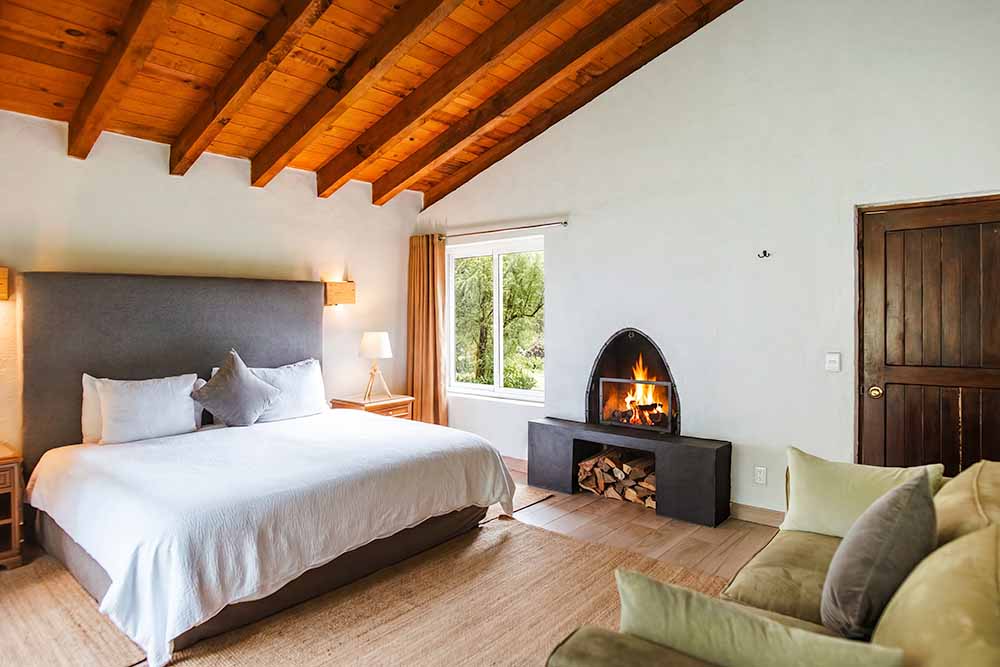
Guests arrive in the early afternoon at Eleusinia’s private retreat center and are welcomed by the team. The first thing most people notice isn’t anything formal, it’s the setting itself. The air is cool and fresh year-round due to the mountain environment, and the constant background of birds creates a sense of quiet that feels noticeably different from the pace of travel.
From there, guests are settled into their private rooms and given time to decompress. Shortly after, everyone gathers for a light, traditional Mexican lunch. Handmade tamales, fresh fruit, and warm champurrado are served. It’s simple, but intentional. A way to ground the body before anything more structured begins.
We break down safety considerations in more detail here.
From the beginning, the focus is individual.
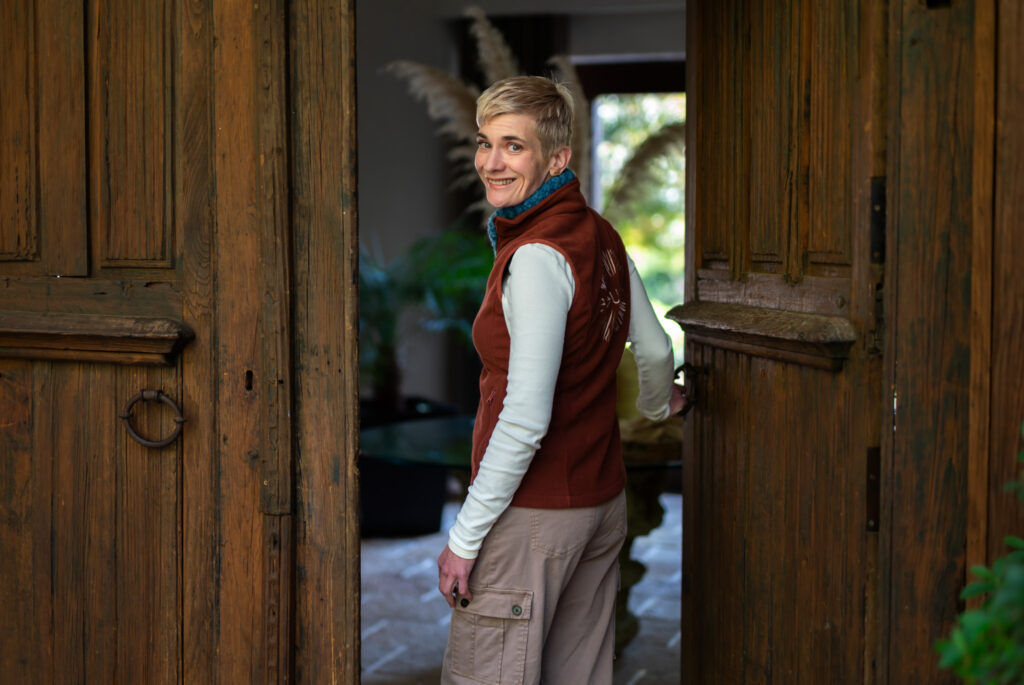
Each guest meets privately with Eleusinia’s medical team for an in-person intake. This is not a quick formality. It’s a detailed conversation that builds on the information submitted prior to arrival.
Together, they review medical history, including current and past medications, and discuss how these may interact with the psychedelic experience. They go over factors that can influence physical comfort, including the likelihood of nausea, and outline practical options to reduce or prevent it.
There is also space to talk through psychological factors. Guests discuss their current anxiety levels and work with the medical team to create a plan for managing it, both in the lead-up to the session and during the experience itself.
The medical team is not separate from the rest of the program. They are present on-site throughout the retreat and actively integrated into the psychedelic sessions themselves and integration sessions, helping monitor and support each guest’s safety and comfort as the experience unfolds.
By the end of this conversation, guests don’t just feel “cleared.” They feel understood, and they have a clear sense of how their individual physiology and mindset are being accounted for.
Following this, each guest has a one-on-one meeting with Eleusinia’s Curandera. This isn’t presented as a performance or ceremony, but as a way of acknowledging the cultural roots of the work and creating a moment of personal grounding at the start of the retreat.
The afternoon continues with a guided tour of the property, a biomechanical mobility intake, and educational orientation sessions covering neuroscience, safety, and how to navigate the experience.
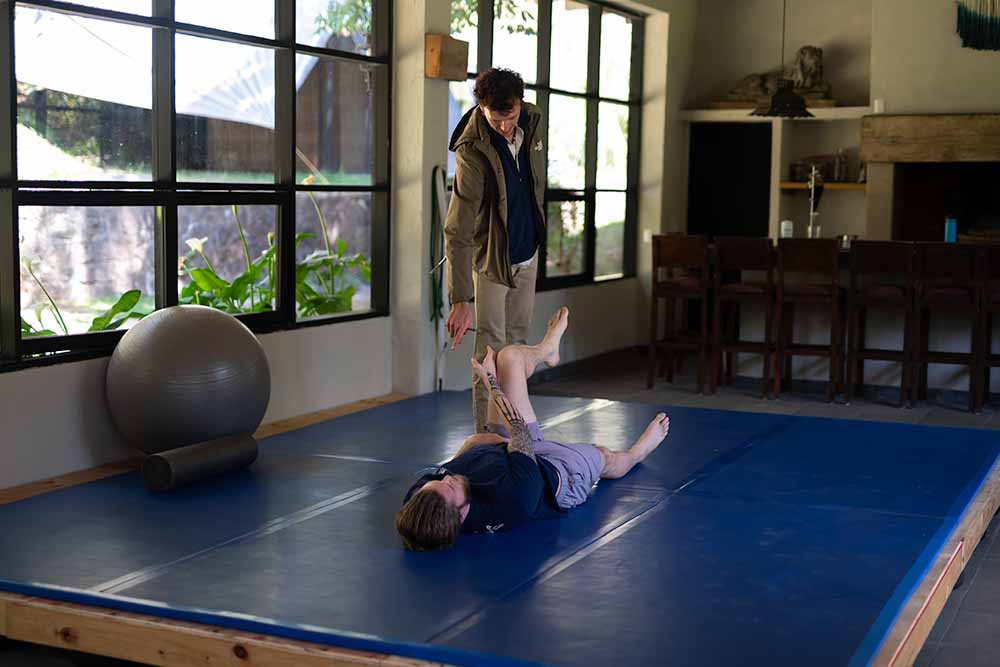
The day closes with a relaxed group dinner, followed by a quiet evening. In each private room, wood-burning fireplaces create a warm contrast to the cool mountain air outside.
Nothing dramatic has happened yet. But the foundation for everything that follows has already been set.
Day 2: What Happens During a Psilocybin Macrodose Session?
The second day is where the experience shifts from preparation into something more direct.
The morning begins slowly. There’s no abrupt transition. Instead, the focus is on settling the nervous system and giving guests a set of tools they can carry into the session.
The day starts with a coffee and juice bar, followed by a morning orientation session referred to as the “preflight instructions.” This is a final opportunity to revisit key concepts and address any lingering questions before the session begins.
From there, guests move into guided breathwork, meditation, somatic awareness, and gentle biomechanical movement. Nothing intense or physically demanding. The goal is simply to bring attention into the body and reduce baseline tension before the experience begins.
Breakfast isn’t served that morning. The session is approached on an empty stomach, which allows for more complete and predictable absorption. Coffee, tea, and fresh juices are available, but the overall tone remains light and intentional.
Alongside this, guests receive practical guidance on how to navigate altered states. Not in abstract terms, but in specific, usable ways. How to respond to moments of discomfort. How to avoid getting stuck in loops. How to shift attention when needed without trying to control the experience.
By the time the session begins, most guests feel prepared. Not because they know what will happen, but because they understand how to work with whatever does.
The psilocybin macrodose begins together in a shared starting space known as The Nest. From there, the experience becomes more individualized as the effects start to manifest.
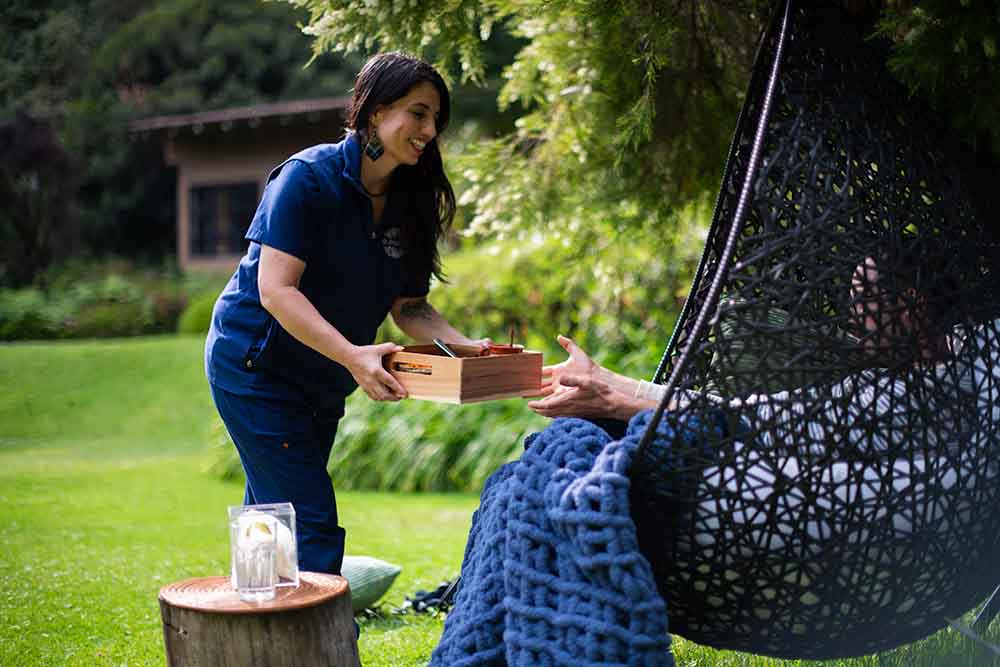
As the effects begin to build, guests move freely through a range of environments across the property. Some settle into hammocks or quiet garden spaces. Others prefer more enclosed alcoves or indoor areas with wide, open views. The design allows for movement without disruption, and for privacy without isolation.

Facilitators are present throughout at approximately a 1:2 ratio. They are attentive, but not intrusive. Most of the time, they are simply present. When needed, they step in with specific grounding and regulation techniques, helping guests navigate difficult moments without imposing on the experience.
At Eleusinia, facilitators remain fully sober throughout the retreat. They do not engage in any mind-altering substances during retreat operations. Their role is to act as steady, reliable support, ensuring that every guest is guided by someone who is fully present, attentive, and capable of responding in real time.
This structure allows guests to explore deeply, without uncertainty about the stability of the environment around them.
The session typically lasts between four to six hours. During that time, the experience can take many forms. Visual changes, emotional release, memory recall, or extended periods of stillness and introspection. Often, it’s not one continuous state, but a series of shifts.
As the peak begins to pass, the body starts asking for something simple and grounding.
At that point, light food is offered. Fresh guacamole, a warm, nourishing soup, and esquites, a traditional Mexican corn dish, are brought out. It’s not a formal meal, just something to gently reintroduce the body after the intensity of the experience.
The guacamole, in particular, has become something of a quiet signature. It’s simple, but after the depth of the session, it tends to land in a way people remember.
As the effects taper, the pace naturally slows.
Some guests choose to have dinner privately in their rooms, not quite ready for interaction. Others join at the dinner table.
This is often the first noticeable shift. The tone of conversation changes. It becomes quieter, more reflective, and more meaningful without anyone trying to force it.
The evening remains intentionally low-key. There’s no pressure to interpret or analyze the experience too quickly. Just space to rest, reflect, and let things settle.
By the end of the day, most guests haven’t “figured everything out.”
That’s not the goal.
What they have is something more useful. A direct experience, and the beginning of a framework for understanding it.

Day 3: What Happens After a Psychedelic Experience? (Integration & DMT)
The third day shifts the focus from experience to understanding.
There’s no immediate rush to explain what happened the day before. Instead, the morning begins at a normal pace. Guests have breakfast, settle in, and begin to reconnect with a more grounded state.
From there, the day becomes more individualized.
Each guest receives a personalized schedule, outlining the timing of their private individualized activities throughout the day. This allows everything to unfold in a way that feels paced and manageable, rather than overlapping or rushed.
Two primary elements shape the day: integration and DMT.
Each guest participates in a one-on-one integration session with a psychotherapist or psychedelic integration specialist. These sessions are scheduled across Day 3 and Day 4, depending on the guest’s individual schedule.
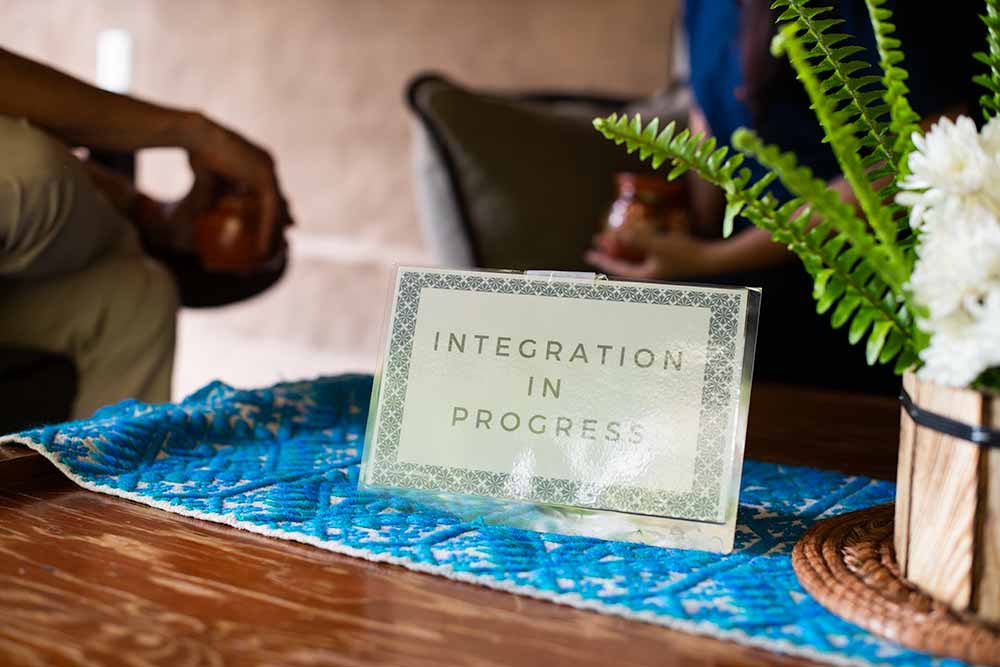
This is a defining feature of the Eleusinia model.
At many retreats, integration happens primarily in a group setting. Here, the focus is individual. This allows guests to process their experience in a way that feels private, precise, and unfiltered. It also makes the process more accessible for those who may not feel comfortable sharing openly in a group environment.
The conversation itself stays grounded. Rather than interpreting the experience in abstract or symbolic terms, the focus is on identifying what actually stood out. Specific moments, emotional responses, patterns that became visible. From there, the discussion shifts toward how those insights might translate into something usable.
What changes, if anything? What gets reinforced? What needs more attention?
Guests also have the option to record their integration sessions. Some use this as a personal reference, while others choose to share it with a therapist or practitioner at home, helping extend the continuity of care beyond the retreat.
In parallel, guests take part in private DMT sessions.
Each session is conducted one-on-one, supported by two facilitators. The full sitting lasts approximately 45 minutes and includes two back-to-back DMT experiences within the same session.
DMT is vaporized, and the effects come on almost immediately. Unlike psilocybin, which unfolds gradually over several hours, DMT is brief and concentrated. The emphasis here isn’t on duration, but on intensity and clarity.
Because the sessions are short and highly supported, they can be approached with a strong sense of containment.
Guests are not navigating this alone. The environment is familiar, the facilitators are present throughout, and the structure allows the experience to be explored without unnecessary uncertainty.

Throughout the day, there’s also a continued emphasis on the body.
Breathwork and meditation are revisited here with a more specific intention. While the sensations from the previous day are still fresh, guests are guided to re-engage similar states using breath alone.
For many, this is a notable moment. Sensations that were previously associated only with the psychedelic experience begin to reappear in a more subtle but recognizable way. It becomes clear that some aspects of the experience are not entirely dependent on the substance itself.
This isn’t about recreating the macrodose. It’s about recognizing what is now accessible, and beginning to develop a sense of agency around it.
Somatic practices are woven in alongside this work to help stabilize the nervous system and bring attention back to physical awareness. After the previous day, this becomes especially important. It helps prevent the experience from remaining purely cognitive or emotional, and instead brings it into something more integrated.
As the day winds down, the group comes together for the first part of the mushroom cultivation class before dinner.
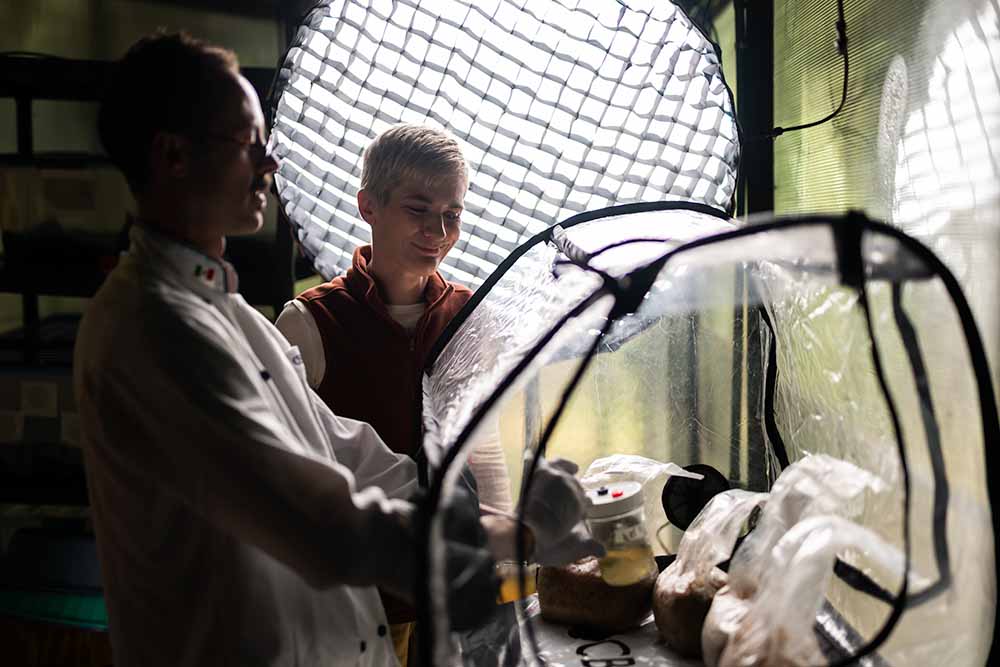
This is a defining feature of the Eleusinia program. Rather than treating the experience as something confined to the retreat itself, it introduces a more practical layer. Guests learn how psilocybin is cultivated and handled, offering a clearer understanding of the substance they’re working with.
More broadly, it reflects a core intention of the program: not just to provide a meaningful experience during the retreat, but to support continued growth afterward.
Dinner follows, and the tone of the evening is noticeably more grounded. The intensity of the previous day has softened into something more reflective, and conversations tend to follow that same shift.
By the end of the day, the experience from Day 2 is no longer just something that happened.
It’s something that’s starting to be understood.
Day 4: How Do You Integrate a Psychedelic Experience?
By the fourth day, the intensity of the initial experience has softened, but it hasn’t disappeared. It’s still present, just less overwhelming and more accessible.
This is also a deliberate pause from psychedelic substances.
After the depth of the macrodose and the intensity of the previous day’s work, the focus shifts toward letting things settle. Nothing new is introduced chemically. Instead, the emphasis is on consolidation, giving both the mind and body space to process before the next round of DMT and psilocybin.
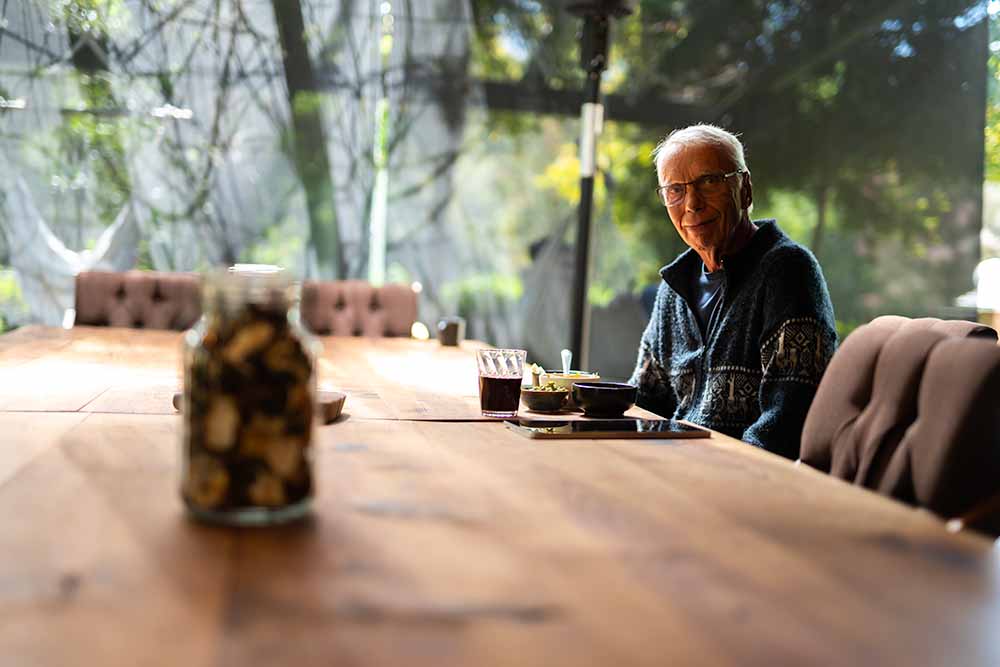
The day is intentionally structured to slow things down. There’s less emphasis on new input, and more focus on working with what’s already there.
For guests who have not yet had their one-on-one integration session, this is typically when it takes place. Like the previous day, these sessions are scheduled individually to allow for a more focused and personal process.
By this point, the conversations tend to shift. Instead of identifying what happened, the focus moves toward how it shows up in the body, in behavior, and in patterns that extend beyond the retreat.
Alongside this, there’s a strong emphasis on bodywork.
Each guest receives a one-hour massage, which is included as part of the program. This isn’t treated as a luxury add-on. It’s part of the integration process. After the physical and emotional intensity of the previous days, the body often holds residual tension. Releasing that tension can change how the experience is processed.
Optional structural integration bodywork is also available. This goes deeper into posture, fascia, and long-standing patterns of tension or imbalance. For some guests, especially those dealing with chronic pain or physical stress, this becomes one of the more noticeable components of the day.
Somatic practices continue as well, reinforcing the connection between awareness and physical sensation.
There’s also space for quieter forms of reflection. Creative writing sessions allow guests to articulate their experience in a different way, often bringing clarity to things that are difficult to express in conversation.
Time outdoors remains an important part of the day. Some guests take walks through the surrounding environment, while others participate in seasonal mushroom foraging when conditions allow. These moments are unstructured, but not incidental. They help re-anchor the experience in something tangible and present.
In the evening, the group comes together for the second part of the mushroom cultivation class, followed by dinner.
That dinner is different.
Guests are guided through a blindfolded dining experience, often referred to as “Dinner in the Dark.” Without visual input, attention shifts to taste, texture, and sound. It’s a simple concept, but after the previous days, it tends to land in a more pronounced way.
What might normally feel like a novelty becomes something more immersive. A continuation of the same perceptual flexibility that the earlier sessions introduced, but now without any substances involved.
By the end of the day, the experience has moved further out of abstraction.
It’s no longer just something that happened internally. It’s something that’s being felt, processed, and expressed in a more embodied way.

Day 5: Are Psychedelic Retreats Guided or Self-Directed?
By the fifth day, guests are no longer approaching the experience for the first time.
They’ve gone through a full psilocybin session, begun integrating it, and have had exposure to DMT in a structured setting. There’s a level of familiarity now, both with the environment and with their own internal responses.
This is where the balance begins to shift.
The day starts with an optional DMT extraction workshop. For those who choose to participate, it offers a practical understanding of how DMT is prepared and handled. Like the cultivation class, it’s not just informational. It’s a way of developing a more direct and informed relationship with the substance.
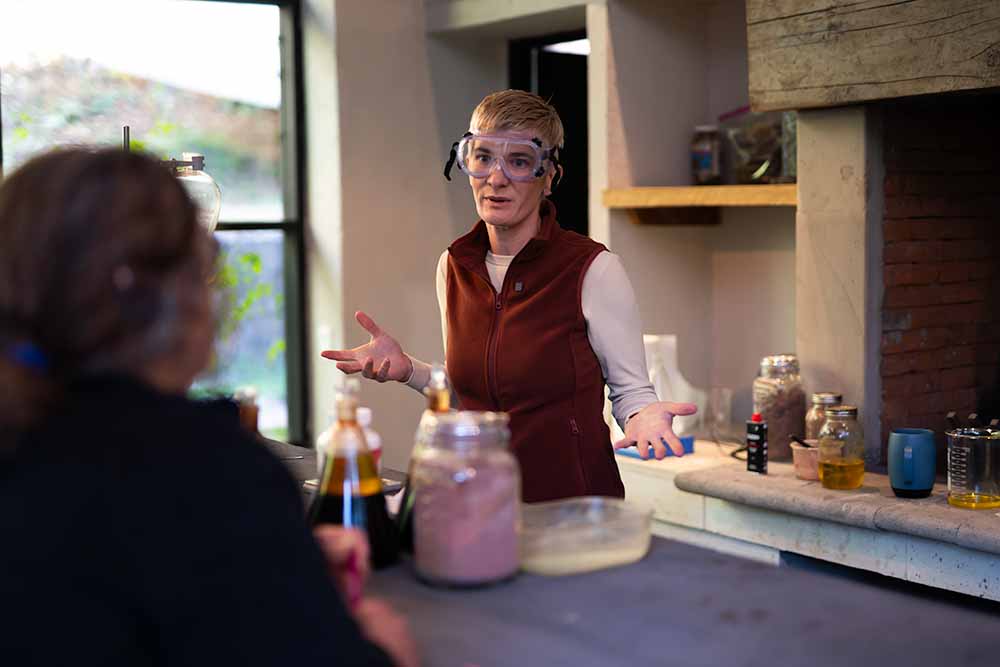
For guests who have found meaningful benefit from their DMT sessions, this becomes especially relevant. It provides a pathway for continuing that work after the retreat, in a way that is grounded in understanding rather than guesswork.
From there, the structure opens up.
Guests explore their second DMT sessions throughout the day, either in a guided format or more independently.
Some choose to repeat the highly supported, one-on-one format from earlier in the week. Others move in a different direction.
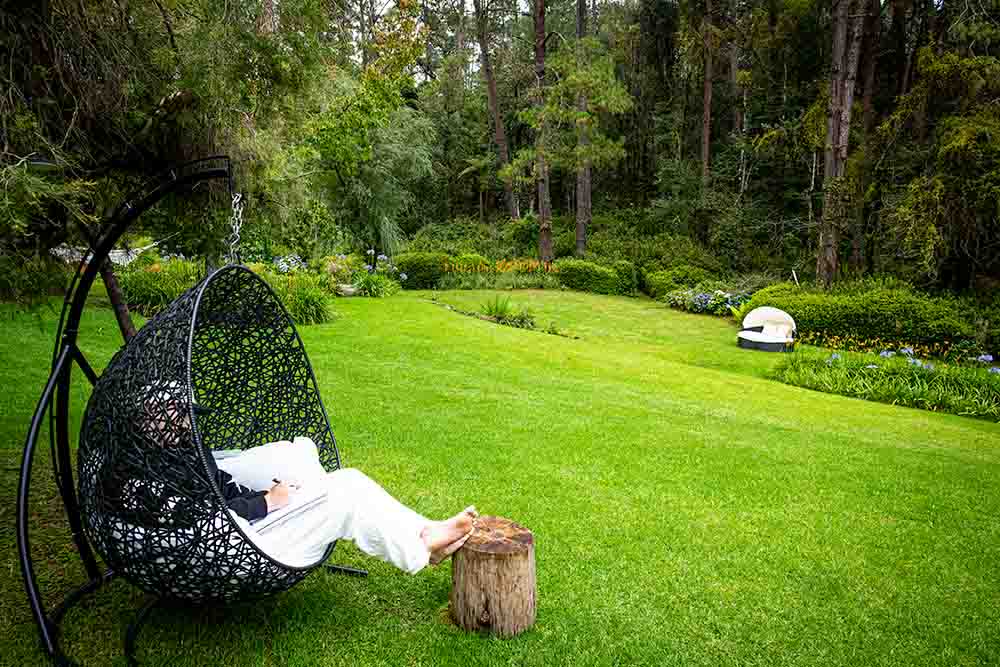
For those opting for a more independent approach, the experience becomes quieter and more self-directed. Guests are set up in a space of their choosing, often a location in the garden that felt significant during their macrodose. They are then given time, typically around 45 minutes, with a DMT vaporizer to explore the experience at their own pace.
Facilitators remain available, but the dynamic shifts. Instead of leading, they support when needed.
This is where the earlier structure shows its value.
The environment is already familiar. The tools for navigating altered states have been practiced. The relationship with the facilitators is established. Because of that, the introduction of autonomy doesn’t feel abrupt. It feels like a natural progression.
Throughout the day, integration and optional bodywork continue. There’s space to revisit insights, ask new questions, or simply allow things to unfold without trying to direct them.
In the afternoon, the group comes together for a traditional Temazcal ceremony.
A Temazcal is a group sweat lodge experience, where participants sit together in a heated, enclosed space warmed by volcanic stones. The heat builds gradually, encouraging physical relaxation, introspection, and a different kind of shared presence.
After several days of primarily internal work, this introduces a more communal element. It can be physically intense, but also grounding in a way that contrasts with the earlier experiences.
It also serves another purpose.
It creates a natural transition point. A way of closing one phase of the retreat before moving into the second psilocybin session.
By the end of the day, most guests feel a shift.
They’re no longer just being guided through the experience. They’re participating in it more actively, with a clearer sense of how to navigate it on their own.

Day 6: What Is a Second Psilocybin Session Like?
By the sixth day, the experience is no longer unfamiliar.
Guests have already gone through a full macrodose, explored integration, and developed a working relationship with both the environment and the facilitators. The uncertainty that often defines a first experience is largely gone.
In its place, there’s something more useful.
Familiarity.
The day begins in a similar way to the first macrodose. Breathwork, meditation, and gentle movement are revisited, not as introductions, but as tools that guests now understand how to use.
There’s also a more personalized layer at this stage.
Each guest has met with the medical team in the previous days to review their first session and make adjustments where needed, as the opportunity presents itself. This can include refining the dose, revisiting comfort measures, or addressing anything that affected the experience the first time around.
The goal isn’t to repeat the first session.
It’s to build on it.
When the macrodose begins, the difference is noticeable. Guests are generally less hesitant, more willing to engage, and more capable of navigating shifts in the experience without resistance.
The environment remains the same, open, varied, and familiar. But the way guests move through it often changes. There’s less searching for comfort and more intentional use of the space.
Facilitators remain present in the same supportive role, but their involvement often becomes lighter. Not because support is less available, but because it’s less frequently needed.
The session itself can feel deeper, but not necessarily more intense.
For some, that means revisiting themes from the first session with more clarity. For others, it opens entirely new directions. In both cases, there’s usually a stronger sense of participation. Guests are not just observing what happens, they’re engaging with it.
That difference matters.
Because it shifts the experience from something exploratory to something more applicable.
As the effects taper, the evening is kept intentionally quiet.
There’s less emphasis on discussion, and more on rest. After two macrodose sessions and several days of integration work, the system has done a lot. The focus here is on allowing it to settle without adding more input.
By the end of the day, the experience has a different quality.
It’s no longer just about what can happen.
It’s about what can be done with it.

Day 7: What Does a Lower-Dose Psychedelic Experience Feel Like?
By the seventh day, the pace shifts again.
After two macrodose sessions and several days of integration, there’s less need for intensity. The focus turns toward clarity, stability, and how the experience translates into something that can be carried forward.
The morning is intentionally flexible.
Guests can spend time journaling, walking the grounds, receiving additional bodywork, or simply resting. For those who feel ready, there is also the option to leave the property and visit the nearby town or take part in more adventurous activities such as paragliding.
This flexibility is intentional. By this stage, guests are not being contained within the retreat environment in the same way. They are beginning to re-engage with the outside world, but from a different baseline.
For those who participated in the DMT extraction workshop, there is also the option to revisit independent DMT sessions during this time.
This is intentional.
Choosing to take the extraction class typically signals an interest in continuing that work beyond the retreat. Because of that, this portion of the schedule is designed to give guests as much supported independent practice as possible while they are still in a controlled environment.
The setting is familiar, facilitators are nearby, and the variables are limited. It’s an opportunity to build confidence and experience before transitioning back into an unsupervised context.
For guests who did not participate in the extraction class but still wish to explore another DMT session, a private session with the Curandera may be scheduled during this time.
Later in the day, the group transitions into a minidose psilocybin experience.
This is distinct from a microdose.
A microdose is typically sub-perceptual, meaning the effects are intentionally kept below the threshold of noticeable change. A minidose, by contrast, sits just above that threshold. The effects are present, but not overwhelming.
The purpose here is specific.
Guests have already experienced two macrodoses, which can be thought of as highly amplified, immersive states. They’ve also practiced breathwork and meditation without any substances involved.
The minidose sits in between.
It creates a subtle but active state where guests can intentionally use those same tools, breathwork, attention, and meditation, to deepen the experience. Rather than being carried by the intensity of a full dose, they are actively participating in shaping it.
For many, this is where something clicks.
They begin to see how internal states can be influenced, not just by the substance itself, but by how they engage with it. In some cases, the experience can be guided into fully psychedelic territory, not through dose alone, but through the application of the skills they’ve developed throughout the week.
The session begins with a silent walk through the surrounding forest, allowing attention to settle naturally into the environment. From there, guided breathwork and meditation provide a structure for exploring the state more intentionally.
The result is often a sense of continuity.
What was previously accessed through intensity now becomes something more stable and repeatable.

The evening shifts into something more social.
Dinner has a lighter tone, followed by group psychedelic trivia. It’s playful, but purposeful. The questions and discussions reinforce the neuroscience, safety principles, and practical frameworks introduced throughout the week.
After several days of introspective work, this shift helps reintroduce a sense of normal interaction without losing the depth that has developed.
The retreat closes with a cacao ceremony and a final group gathering.
This isn’t positioned as a dramatic ending, but as a way to reflect, share, and acknowledge what each person has moved through over the course of the week.
By the end of the day, the experience feels less like a series of events, and more like something cohesive.
Not something separate from daily life, but something that can move with it.
Day 8: What Happens After a Psychedelic Retreat Ends?
The final day is quieter.
There’s no structured programming, no new techniques, and no attempt to add anything more to the experience. By this point, the focus has already shifted toward carrying things forward rather than taking anything else in.
Guests gather for a final breakfast, often followed by optional sharing. Some choose to reflect out loud. Others keep things more internal. There’s no expectation either way.
The tone is noticeably different from the first day.
What began as a group of individuals arriving from different places now feels more cohesive. Conversations tend to be more direct, more open, and more grounded in shared experience.
After breakfast, guests begin the transition home.
Transportation returns them to the Mexico City airport, where they continue onward to their destinations.
Which is why the structure doesn’t end here.
Guests leave with more than just the memory of the experience. They leave with a set of tools, a clearer understanding of how to work with their own internal states, and, importantly, a way to continue.
Ongoing support remains available through Eleusinia’s online community and weekly integration circles. For those who want it, there is a continuation of the same kind of grounded, practical support that defined the retreat itself.
The goal isn’t to keep the experience contained within those eight days.
It’s to make sure it doesn’t disappear once they’re over.

What Makes a Psilocybin Retreat Effective?
A psilocybin retreat isn’t defined by any single moment.
Not the macrodose. Not the setting. Not even the insights that come during the experience.
What matters is how those elements are structured together.
Preparation shapes how the experience begins.
Support determines how it unfolds.
Integration defines what remains afterward.
When those pieces are aligned, the experience becomes something more than temporary.
It becomes usable.
That’s the difference between something that feels meaningful in the moment and something that continues to have value long after the retreat ends.
If you’re exploring whether this kind of experience is right for you, it’s worth understanding not just what happens during a session, but how the entire process is designed.
Because in the end, that design is what determines the outcome.