Can You Take Lithium and Psilocybin Together?
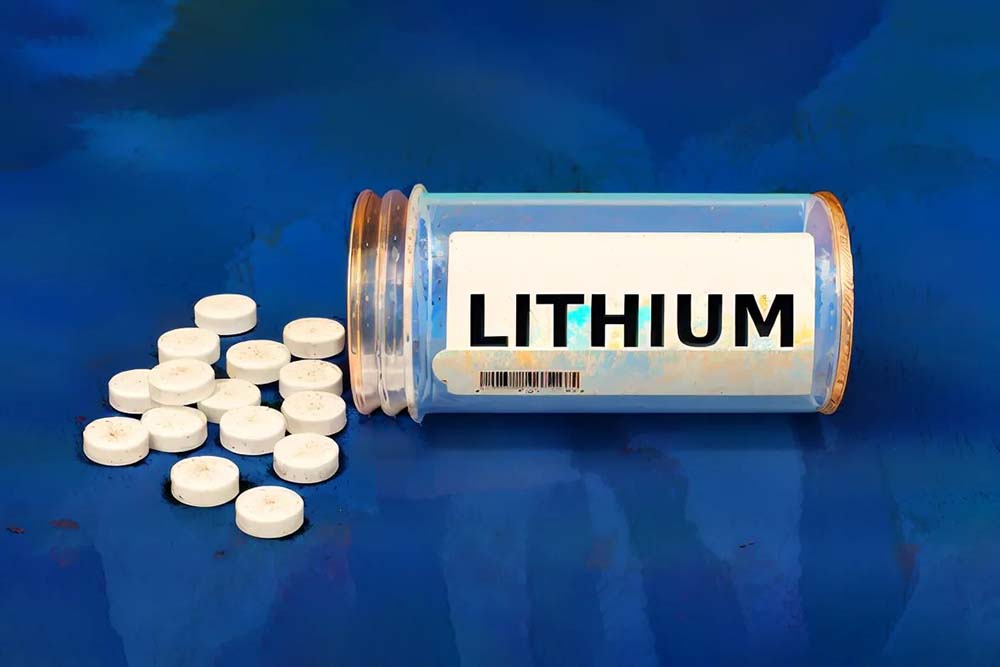
Lithium and psilocybin should not be taken together.
Lithium is widely considered a contraindicated medication in the context of psychedelic use, including psilocybin. This is not a matter of preference or caution. It is a safety-based exclusion.
In addition, this risk is not limited to simultaneous use. A sufficient washout period is required after discontinuing lithium before psilocybin can be considered safe. In practice, this is typically a minimum of 30 days, allowing the medication to clear and the nervous system to stabilize.
Reports of adverse reactions, including seizures, have been documented when lithium is combined with psychedelic substances. While the exact mechanism is not fully understood, the interaction is considered unpredictable and carries a level of risk that cannot be responsibly managed within a retreat setting.
For this reason, lithium use is treated differently from most other medications.
At Eleusinia, lithium is a disqualifying factor for participation unless an appropriate washout period has been completed.
This does not mean that all medications are treated the same way. Many can be evaluated, adjusted, or accommodated depending on the situation. Lithium is not one of them.
At Eleusinia, the goal is not simply to enforce exclusion criteria. It is to ensure that guests understand the reasoning behind them.
Psychedelic safety is not built on arbitrary rules. It is built on informed decision-making.
For this reason, education is a central part of the process. Guests are not only screened, but guided through the rationale behind key safety considerations, including medication interactions and risk factors.
Why Is Lithium Considered Unsafe with Psilocybin?
Lithium is considered unsafe in combination with psilocybin due to the potential for serious neurological reactions, including seizures.
While these outcomes are relatively rare, their severity and unpredictability make them incompatible with a controlled retreat setting.
While the exact mechanism behind this interaction is not fully understood, multiple case reports have documented adverse outcomes when lithium is combined with psychedelic substances. These reactions are not consistently predictable, which makes them particularly difficult to manage in a controlled setting.
A review of documented cases published in the journal Pharmacopsychiatry examined reports of adverse events involving lithium and classic psychedelics. The findings included instances of seizures and other severe reactions, even in situations where the substances were not taken simultaneously.
This pattern suggests that the risk is not limited to direct overlap, but may persist beyond the immediate presence of the drug in the system.
Lithium affects neuronal signaling and stability in ways that differ from most other psychiatric medications. When combined with the altered neurochemical state produced by psilocybin, this can create conditions that are not well understood and cannot be reliably predicted.
For this reason, the interaction is treated as a high-risk variable rather than a manageable one.
At Eleusinia, this level of uncertainty is not considered acceptable within a therapeutic environment.
How Does the Lithium Psilocybin Interaction Compare to Other Medications?
Not all psychiatric medications carry the same level of risk when combined with psilocybin.
Some medications primarily affect how the experience feels, while others introduce safety concerns that require more careful evaluation.
Selective serotonin reuptake inhibitors, or SSRIs, are often cited as a potential concern due to their effects on the serotonin system. Earlier assumptions suggested a meaningful risk of serotonin syndrome when combined with psychedelics.
Current evidence suggests this concern has likely been overstated.
Classic psychedelics such as psilocybin and DMT primarily act by stimulating serotonin receptors, particularly 5-HT2A receptors, rather than significantly increasing overall serotonin levels. As a result, the mechanism that typically underlies serotonin syndrome, which involves excess serotonin accumulation, is not strongly engaged in the same way.
This does not mean there are no considerations. SSRIs can still influence the experience, often by reducing intensity or altering subjective effects. However, these interactions are generally more predictable and can often be managed.
Other medications, such as MAOIs, require a higher level of caution due to their broader effects on neurotransmitter metabolism and potential for interaction.
Lithium is different.
The concern with lithium is not simply related to serotonin. It is the presence of documented, unpredictable neurological reactions, including seizures, when combined with psychedelic substances.
This places lithium in a separate category.
At Eleusinia, medications are evaluated individually, based on their mechanism, risk profile, and how predictable their interaction is within a controlled environment. Some can be worked with. Some require caution.
Lithium is treated as a disqualifying factor because its risk cannot be reliably managed.
Why Is Lithium a Disqualifying Medication for Psilocybin Retreats?
Medication screening is one of the most important parts of preparing for a psychedelic experience.
It is also one of the areas where approaches can vary significantly between programs.
At Eleusinia, screening is not treated as a checklist. It is a structured process designed to identify variables that could affect both safety and the quality of the experience.
This begins with a detailed review of each guest’s medical history and current medications, followed by an in-person intake with a medical professional. The goal is not only to identify risks, but to understand how different factors may interact within the context of a psychedelic session.
Most medications fall into a category that can be evaluated and, in some cases, adjusted with appropriate planning.
Lithium does not.
Because of its unpredictable interaction with psychedelic substances, including the documented risk of seizures and the need for a sufficient washout period, it is treated as a strict exclusion.
At Eleusinia, this means that individuals currently taking lithium, or those who have not completed an appropriate washout period, are not eligible to participate.
This is not a matter of policy preference. It is a reflection of risk that cannot be responsibly managed within a retreat setting.
At the same time, the goal is not simply to apply rules.
It is to ensure that guests understand the reasoning behind them.
Safety in this context is not based on arbitrary restrictions. It is based on informed decisions grounded in biology and clinical experience.
For that reason, education is treated as part of the process. Guests are not only screened, but guided through the rationale behind key safety considerations, so they can make informed choices about their participation.
Why Not All Medical Professionals Are Psychedelic-Informed
Medical training provides a strong foundation in biology, pharmacology, and patient care.
However, psychedelic-specific education is not typically part of standard medical curricula.
As a result, many medical professionals are familiar with the underlying systems affected by psychedelics, but may not have direct training in how these substances interact with specific medications or how their effects present in real-world settings.
This does not reflect a lack of competence.
It reflects a gap in specialization.
Psychedelic experiences involve a combination of psychological, neurological, and environmental factors that are not commonly encountered in conventional clinical practice. Understanding how these elements interact requires both medical knowledge and direct experience with the context in which these substances are used.
This is particularly important when evaluating risk.
General medical guidance may not always account for psychedelic-specific variables, including how certain medications interact in altered states or how adverse reactions may present differently during or after a session.
At Eleusinia, medical professionals are not only trained in their respective fields, but also operate within a framework that incorporates psychedelic-specific knowledge and experience.
This allows for more accurate screening, more informed decision-making, and more precise management of both expected and unexpected responses.
What If You Take Lithium but Want to Attend a Psilocybin Retreat?
If you are currently prescribed lithium, it is important to approach this situation with caution.
Lithium is typically prescribed for conditions such as bipolar disorder, where stability is a primary concern. Any decision to change or discontinue this type of medication should be made in coordination with a qualified medical professional who is familiar with your history.
It is not something that should be adjusted independently in order to participate in a psychedelic retreat.
At Eleusinia, lithium use is treated as a disqualifying factor unless an appropriate washout period has been completed. This generally requires a minimum of 30 days after discontinuation, along with sufficient stability during that period.
However, the decision to discontinue lithium is not made within the context of retreat preparation alone.
It must be evaluated within the broader context of your overall mental health, your diagnosis, and your long-term treatment plan.
For some individuals, remaining on lithium may be the safer and more appropriate course.
For others, there may be a pathway to safely discontinue under medical supervision, followed by a period of stability before considering participation.
The role of a retreat is not to direct that decision.
It is to provide clear information about what is required for safe participation, so that individuals can make informed choices in consultation with their healthcare providers.
At Eleusinia, that means being transparent about both the risks and the requirements, without encouraging decisions that could compromise long-term stability.
Lithium and Psilocybin: A Risk That Cannot Be Managed
Not all risks associated with psychedelic use are the same.
Some can be anticipated, adjusted for, and managed within a structured environment.
Others cannot.
Lithium falls into the latter category.
The combination of unpredictable neurological effects, documented adverse reactions, and the need for a sufficient washout period places it outside the range of what can be responsibly accommodated in a retreat setting.
At Eleusinia, this distinction is taken seriously.
The goal is not to exclude unnecessarily. It is to ensure that every participant enters the experience under conditions that are as safe, stable, and predictable as possible.
Understanding these boundaries is part of that process.
Quick Answers About Lithium and Psilocybin
Can you take lithium and psilocybin together?
No. Lithium and psilocybin should not be taken together. The interaction is considered unsafe due to the risk of unpredictable neurological reactions, including seizures.
How long should you stop lithium before taking psilocybin?
A washout period is required. In practice, this is typically a minimum of 30 days after discontinuing lithium, along with a period of stability. This should only be done under medical supervision.
Why is the lithium psilocybin interaction considered dangerous?
Documented case reports have shown serious adverse reactions, including seizures. The interaction is not well understood and is considered unpredictable, which makes it unsuitable for controlled therapeutic settings.
Is lithium more dangerous than other medications with psilocybin?
Yes. While some medications such as SSRIs may alter the experience, lithium is considered a high-risk interaction due to its association with seizures and unpredictable neurological effects.
Can SSRIs cause serotonin syndrome with psilocybin?
Current evidence suggests the risk is low. Classic psychedelics like psilocybin primarily act on serotonin receptors rather than significantly increasing serotonin levels. This differs from substances that are more commonly associated with serotonin syndrome.
Why do psychedelic retreats screen for lithium use?
Because the risks associated with lithium cannot be reliably managed during a psychedelic experience. Retreats with medical screening protocols exclude lithium use to ensure participant safety.
Can you attend a psychedelic retreat if you take lithium?
Not while actively taking it. Participation may be considered only after a medically supervised discontinuation and an appropriate washout period, along with demonstrated stability.
Is it safe to stop lithium to attend a psychedelic retreat?
This depends on the individual and should only be decided with a qualified medical professional. Lithium is often prescribed to maintain stability, and discontinuing it carries its own risks.